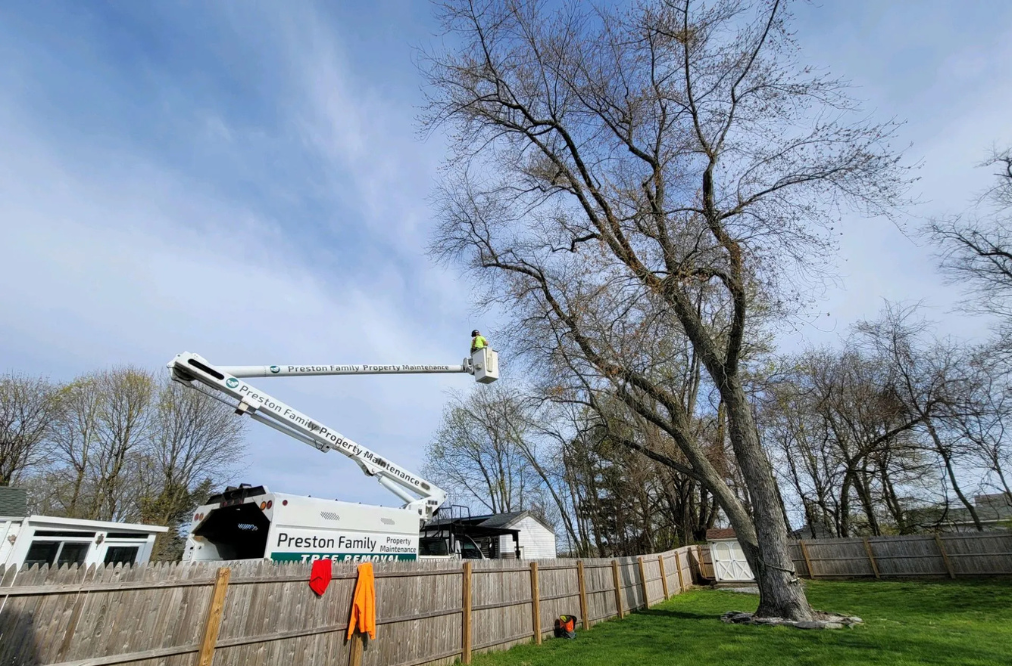
Trees bring beauty, shade, and long-term value to your property. But when a tree becomes unstable, it can quickly turn into a serious safety concern. In Connecticut, where strong winds, heavy snow, ice storms, and saturated soil are common, hazardous trees are a frequent cause of property damage.
Knowing what to look for can help you take action early, before a tree threatens your home, vehicles, or family. Below are the most common warning signs homeowners should be aware of when evaluating tree safety.
Leaning Trees or Sudden Shifts
A tree that has begun to lean, or is leaning more than it used to, can signal a serious underlying issue. While some trees naturally grow at an angle, a recent or increasing lean often points to root instability or soil failure.
Common red flags include:
- A noticeable tilt away from vertical
- Cracked or lifting soil around the base
- Exposed, damaged, or broken roots
During Connecticut’s wet seasons, saturated ground can weaken root systems, making even healthy-looking trees vulnerable to failure.
Dead, Hanging, or Broken Branches
Dead branches, often called “widowmakers,” are one of the most common hazards we encounter. These limbs can fall without warning, especially during wind, snow, or ice events.
Watch for:
- Large dead branches in the canopy
- Limbs that are cracked or hanging but still attached
- Trees that do not leaf out fully during the growing season
The International Society of Arboriculture (ISA) notes that deadwood significantly increases the likelihood of branch failure and should be addressed promptly.
Cracks, Cavities, or Trunk Damage
A tree’s trunk provides its main structural support. When that structure is compromised, the entire tree can become unsafe.
Signs of concern include:
- Vertical cracks or deep splits
- Hollow or decaying sections
- Mushrooms or fungal growth on the trunk or near the base
Fungal growth often indicates internal decay that is not always visible from the outside but can greatly weaken a tree’s stability.
Root Damage Below the Surface
Roots are the foundation of a tree, and damage below ground can be just as dangerous as visible issues above it.
Root problems are often caused by:
- Construction or trenching near the tree
- Soil compaction from vehicles or heavy equipment
- Erosion or prolonged flooding
The Connecticut Department of Energy & Environmental Protection (DEEP) identifies root damage as a leading factor in tree failure during storms.
Trees Too Close to Homes or Power Lines
Even a healthy tree can pose a risk if it is growing in the wrong location.
A tree may be hazardous if it is:
- Overhanging your house, garage, or driveway
- Growing toward power lines
- Positioned where a fall would block access or cause major damage
In storm-prone areas of Connecticut, proximity alone can turn a tree into a liability.
Signs of Past Storm Damage
Trees that have already been damaged in previous storms are more likely to fail again.
If a tree has:
- Lost large limbs
- Been struck by lightning
- Split and continued growing
It should be professionally evaluated, even if it currently appears stable.
When It’s Time to Call a Professional
If you notice any of these warning signs, it is best not to wait. Hazardous trees do not always give clear notice before failing.
A professional tree service can:
- Evaluate structural stability
- Identify hidden decay or root problems
- Recommend pruning, bracing, or removal
- Safely remove dangerous trees before they cause damage
Trusted Tree Removal for Connecticut Homeowners
At Preston Family Tree Removal, we help homeowners across Connecticut identify and address hazardous trees before they become emergencies. As a family-owned company, we are committed to honest assessments, safe work practices, and protecting your property.
If you are concerned about a tree on your property, contact Preston Family Tree Removal for a professional evaluation and peace of mind.